
A corporate event is a business activity, not a venue booking. A conference, product launch, gala dinner, town hall, retreat, or hybrid event only works when it starts with a clear objective and is supported by practical planning, strong production, and reliable onsite coordination.
This guide gives companies in Singapore and across APAC a concise overview of what matters before, during, and after a corporate event. It covers how to set objectives, build a planning process and checklist, write a production brief, plan AV and livestream requirements, choose the right event partner, measure ROI, and turn the event into content that keeps working long after the room empties.
Why Singapore event statistics matter
Singapore is not a small event market operating in isolation. In 2026, The Business Times reported that total tourism receipts reached S$32.8 billion in 2025, with MICE tourism receipts of S$2.3 billion, a 35% increase on the S$1.7 billion recorded in 2024. The Singapore Tourism Board has also set out an ambition to reach S$4.5 billion in MICE tourism receipts by 2040.
For companies, this means corporate events are now planned in a competitive, high-value environment where venue choice, production quality, audience experience, and measurement matter more than ever. The Singapore Tourism Board has described MICE visitors as high spenders and a key driver of quality growth, which is precisely why a corporate event should not be treated as a one-day logistics task. Planned properly, a single event can build brand trust, deepen customer relationships, align employees, and generate content value that continues for months.
What event management and event production mean
Event management is the planning and coordination behind the event. It connects the objective, audience, budget, stakeholders, venue, suppliers, timeline, guest experience, risk planning, and post-event reporting.
Event production is the technical and creative delivery. It covers staging, AV, sound, lighting, screen content, livestreaming, speaker support, rehearsals, show calling, and onsite execution.
Most corporate events need both, and the two are easy to get out of balance. A well-planned event can still feel unprofessional if the sound is unclear, the stage looks weak, or the livestream fails. Equally, a polished production can miss the mark if the objective, audience flow, and stakeholder expectations have not been managed.
Common corporate event types
The right planning approach depends on the format. Conferences, seminars, and leadership forums usually need strong agenda flow, speaker coordination, AV, timekeeping, and audience engagement. Product launches and brand activations call for sharper attention to messaging, reveal moments, visual impact, media value, and follow-up content.
Gala dinners, award ceremonies, town halls, retreats, and other internal events combine business communication with hospitality and culture. They can look less complex than external conferences, but they still demand careful planning around guest flow, leadership preparation, entertainment, recognition moments, and production cues.
Hybrid and virtual events add a further layer, because companies must plan for two audiences at once: people in the room and people joining remotely. The remote audience needs broadcast-quality audio, clear camera coverage, platform access, engagement tools, moderation, and reliable streaming, not a single camera placed at the back of the room.
A simple corporate event planning process
Start with the business objective, before any conversation about venue, theme, or decoration. The objective shapes the audience, format, agenda, production level, content requirements, budget priorities, and success metrics. A product launch, an employee town hall, a client appreciation dinner, and a regional leadership conference should not be planned in the same way.
Once the objective is clear, confirm the audience, format, budget range, timeline, approval process, and internal owner. Settling this early prevents unclear decision-making later, particularly when marketing, HR, leadership, sales, procurement, and external partners are all involved.
The plan should then bring the detail together: venue selection, guest journey, registration, catering, accessibility, speaker management, content deadlines, supplier coordination, production brief, run-of-show, risk plan, and post-event reporting. Before event day, rehearse the parts that can fail publicly, such as microphones, slides, videos, lighting cues, livestream links, speaker movement, and transitions.
Corporate event planning checklist: the key areas
A full checklist belongs on a dedicated page. For this guide, focus on the four core areas below before briefing an agency or production team.
Objective and audience. Event goal, target attendees, format, date, backup date, budget, approvals, and internal owner.
Guest experience. Venue, floor plan, registration flow, catering, accessibility, signage, transport, and VIP requirements.
Programme and content. Agenda, speakers, emcee, scripts, decks, videos, run-of-show, and rehearsal schedule.
Production and reporting. Stage, AV, sound, lighting, livestream, photography, videography, risk plan, and post-event measurement.
What to include in an event production brief
A clear brief helps an event company or production team recommend the right setup and quote accurately. Keep it practical and specific across four areas.
Event basics. Objective, audience profile, date, venue, room layout, guest count, duration, and key contacts.
Programme details. Draft agenda, run-of-show, speaker list, presentation formats, rehearsal needs, and content deadlines.
Technical needs. Stage, screen, microphones, lighting, playback, branding, livestream, recording, interpretation, and backup requirements.
Commercial and approval details. Budget range, approval process, supplier responsibilities, known risks, and decision timeline.
Stage, AV, lighting, and livestream basics
Production quality is what makes an event feel professional. Guests may not notice every technical decision, but they will quickly notice unclear sound, poor visibility, awkward transitions, weak lighting, or an unstable livestream.
The stage should support visibility, speaker movement, branding, camera angles, panel discussions, award flows, and safe access. AV and sound cover microphones, speakers, screen setup, slide control, playback, cues, backups, and technical rehearsal. Lighting should serve both the audience experience and camera quality, with attention to energy use where the venue and setup allow.
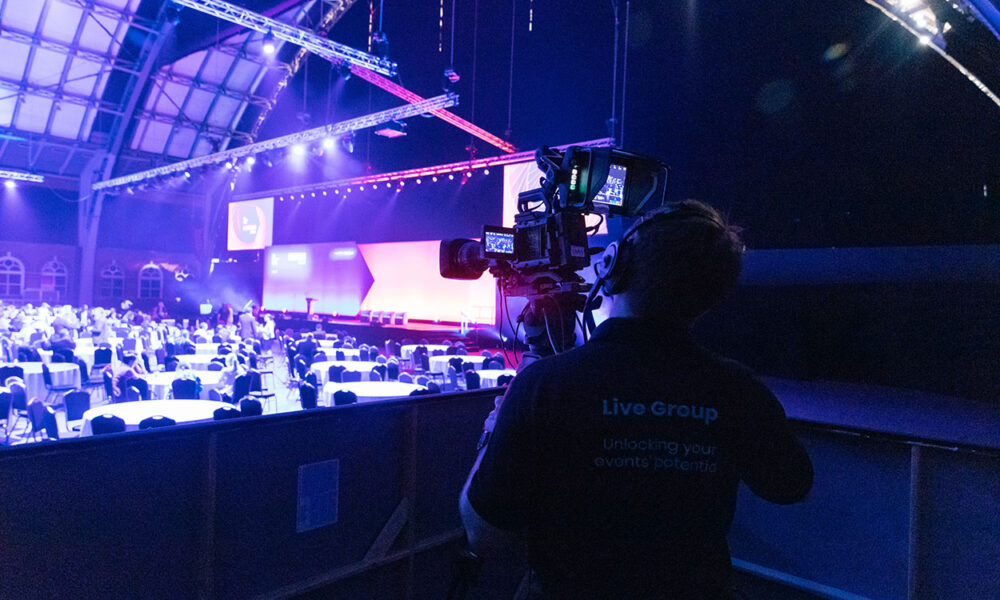
For hybrid or livestreamed events, plan camera positions, broadcast audio, platform access, remote speaker checks, moderation, recording, and backup internet from the outset. These items shape the room layout, technical crew, rehearsal schedule, and content flow, so leaving them late is costly.
How to choose a corporate event company in Singapore
Do not choose an event company on the lowest quote alone. A corporate event partner should understand the objective, audience expectations, stakeholder management, production needs, and venue constraints.
Relevant experience matters most. Before appointing a partner, check whether they have handled similar formats, audience sizes, venue types, and technical requirements. A team that excels at small networking sessions may not be the right fit for a regional conference with multiple speakers, livestreaming, sponsor deliverables, and VIP protocols.
A good proposal is explicit about scope, inclusions, exclusions, assumptions, timeline, manpower, production setup, optional costs, and responsibilities. That clarity makes comparison easier and reduces budget surprises during planning.
Planning for event ROI
Define ROI before planning begins. The right metric depends on why the event exists. Marketing events may focus on leads, meetings booked, pipeline influence, media coverage, or content performance. Internal events may focus on employee engagement, alignment, feedback, retention, or leadership communication. Set the measure first, then design the agenda, speakers, audience journey, content capture, follow-up plan, and measurement tools to support it.
A strong event should not end when guests leave. It should generate usable insights, sales conversations, internal alignment, brand content, or stakeholder follow-up. With S$2.3 billion in MICE tourism receipts recorded in 2025, business events remain a high-value part of Singapore’s economy, and that value is far easier to capture when ROI is built into the plan rather than assessed after the fact.
APAC event management considerations
Regional events add complexity, because markets differ in language, culture, venue rules, supplier standards, travel requirements, public holidays, time zones, and audience expectations. A regional plan should hold the core brand message consistent while leaving room for local adaptation.
In Singapore, sustainability is becoming both more practical and more measurable. The Singapore Tourism Board has reported industry-wide initiatives, including certification milestones for MICE venues, SACEOS members, and hotel room stock. For planners, that makes venue efficiency, HVAC planning, lighting choices, load-in schedules, and waste management genuine parts of event planning, not optional CSR extras.
For regional conferences, roadshows, or hybrid events, plan early for interpretation, bilingual hosts, remote speakers, cross-border logistics, and varying approval timelines. Each can affect budget, production setup, rehearsal time, and guest experience.
Hybrid event production
A hybrid event is not an in-person event with a camera added. It is designed for two audiences from the start: people in the room, and people joining remotely.
The onsite audience needs clear sound, strong visuals, smooth transitions, and a good room experience. The online audience needs broadcast-quality audio, clear camera framing, platform access, live moderation, Q&A, polling, chat support, and recordings that are easy to watch later.
Hybrid events succeed when the livestream, speaker flow, audience engagement, technical checks, and backup plan are built in from the beginning. When streaming is treated as an add-on, the remote experience is the first thing to suffer.
Video, photography, and content capture
Plan every corporate event for both the live experience and its post-event content value. Photography and videography can feed internal communications, sales enablement, social media, recruitment, PR, stakeholder reporting, and future event promotion.
Before the event, define the moments that must be captured: leadership speeches, panels, awards, product reveals, networking, branding, audience reactions, and VIP interactions. Confirm the deliverables too, such as highlight videos, speaker clips, recap videos, interviews, social cutdowns, full recordings, photo galleries, and press images.
This planning has to happen before event day. If the team only considers content afterwards, the footage, quotes, audience reactions, and interviews that mattered most may already be lost.
Turning one event into multiple content assets
One corporate event can create value well beyond the event day. A single conference can become keynote clips, speaker quote graphics, blog articles, LinkedIn posts, email content, photo galleries, case studies, and short videos for sales or employer branding.
To make that work, the content plan must sit inside the event plan. The team needs to know what to record, who to interview, which sessions matter most, where cameras should be placed, what permissions are required, and how quickly each asset needs to be edited and distributed.
Speakers, emcees, and corporate event gifts
Speakers and emcees are not programme fillers. They shape audience attention, message clarity, pacing, and the overall tone of the event. Choose them on the basis of the objective, audience level, industry relevance, presentation style, and ability to carry the intended message.
Corporate event gifts deserve the same intent. Generic gifts are easy to forget. The better ones are useful, relevant to the audience, connected to the theme, aligned with company values, or designed to help continue the relationship after the event.
Common event planning mistakes to avoid
Most event problems trace back to weak decisions made early. The most common is starting with the venue, theme, or decoration before defining the objective and audience, which produces an event that looks busy but supports no clear business outcome.
A second is underestimating production. AV, sound, lighting, livestreaming, speaker preparation, and rehearsal time are not minor details; they determine how professional the event feels and how smoothly it runs.
A third is relying on a rough agenda. A corporate event needs a detailed run-of-show with timings, cues, owners, transitions, and contingency notes. Post-event measurement should be planned early too, so the team can understand what worked and what to improve next time.
Frequently asked questions
What is the difference between event management and event production? Event management is the planning and coordination behind an event, covering objective, audience, budget, suppliers, timeline, and reporting. Event production is the technical and creative delivery, covering staging, AV, sound, lighting, livestreaming, and onsite execution. Most corporate events need both.
Where should corporate event planning start? With the business objective, before any decision about venue, theme, or budget. The objective shapes the audience, format, agenda, production level, content, and the metrics used to judge success.
How should a company choose an event partner in Singapore? On relevant experience and a clear proposal, not the lowest quote. Check that the partner has handled similar formats, audience sizes, and technical requirements, and that the proposal sets out scope, inclusions, exclusions, assumptions, manpower, and responsibilities.
How is event ROI measured? By defining the metric before planning begins. Marketing events may track leads, meetings, pipeline, or media coverage; internal events may track engagement, alignment, feedback, or retention. The agenda, content capture, and follow-up are then designed to support that measure.
What makes a hybrid event work? Designing for two audiences from the start. The livestream, broadcast audio, camera framing, moderation, engagement tools, and backup plan need to be built into the event, not added on at the end.
Planning an event in Singapore or APAC
A successful corporate event in Singapore or APAC begins with a clear purpose and a practical plan that connects strategy, logistics, production, content, and measurement. Get that foundation right and you reduce last-minute issues, improve the guest experience, strengthen ROI, and create lasting value through content and follow-up. To discuss an upcoming event, contact us here.