
Planning a corporate event in Singapore often starts with a simple question: should the venue be indoors or outdoors? The answer depends less on appearance than on the event objective, audience comfort, weather exposure, technical production, logistics and contingency planning. This guide compares both options and explains when a covered or semi-outdoor space may offer the better balance.
Indoor vs Outdoor Venues at a Glance
| Planning factor | Indoor venue | Outdoor venue |
| Weather control | High | Requires shelter and backup planning |
| AV and livestream | More predictable | Needs weather, daylight and noise controls |
| Guest comfort | Consistent temperature and seating | More atmospheric but climate-sensitive |
| Brand experience | Controlled lighting and scenic design | Strong natural backdrop and open movement |
| Cost certainty | Often clearer once inclusions are known | Can rise with temporary infrastructure |
| Best suited to | Conferences, town halls, awards and hybrid events | Receptions, team events and experiential launches |
Part 1: Start with the Event Goal, Audience and Format
Venue choice should follow the event objective
Indoor and outdoor spaces create different conditions for attention, interaction and production. An executive conference, leadership town hall or hybrid seminar usually benefits from the control of an indoor room. A networking reception, team celebration or experiential launch may gain more from an outdoor setting. The decision should begin with the change the event is meant to create, not with a photograph of the venue.
Consider how the audience will use the space
Review the expected attendance, age profile, accessibility needs, dress code, programme length and proportion of overseas guests. A short evening reception can tolerate more movement and informal seating than a full-day conference. Senior leaders, speakers and international delegates may also require private rooms, reliable transport connections and predictable comfort. Live Group’s event management approach similarly starts with the objective, audience and format before moving into detailed design and delivery.
Use the complete programme, not one highlight
A venue may look suitable for the main session but struggle with registration, catering, breakout rooms, speaker preparation or post-event networking. Map the event from arrival to departure. If the event includes a livestream, exhibition area, product demonstration or awards segment, include those requirements before deciding whether indoor or outdoor space is more practical.
Part 2: Compare Indoor, Outdoor and Covered Spaces
Why companies choose indoor venues
Indoor venues offer the strongest control over temperature, rain, sound, lighting and presentation conditions. Established venues may also provide digital infrastructure that is difficult to recreate outdoors. Marina Bay Sands’ Hybrid Broadcast Studio covers 442 square metres, supports up to 50 live guests and includes livestreaming, hologram, AR and VR capabilities. At Suntec Singapore, The Big Picture at the main entrance is promoted as the world’s largest high-definition LED video wall. These facilities make indoor venues especially suitable for content-heavy programmes where clear audio, readable screens and reliable timing matter.
Where indoor venues can be limiting
The trade-off is often a more conventional atmosphere and less flexibility around open-air activities. Existing décor, ceiling height, rigging restrictions, room shape and fixed access times can influence the experience. A technically capable room can still feel wrong if the event needs informal movement, outdoor demonstrations or a stronger connection to place.
Why companies choose outdoor venues
Outdoor venues can create energy, visual impact and a stronger sense of place. Gardens, rooftops, waterfronts, beaches and courtyards work well for networking, wellness activities, team programmes and lifestyle-led brand experiences. Fort Canning Green is an 11,500-square-metre lawn with standing capacity for up to 7,000 people, while Gardens by the Bay’s The Meadow covers 22,000 square metres and lists standing capacity of up to 30,000. These examples show the scale outdoor settings can provide, but usable capacity still depends on staging, shelter, catering and safety requirements.
Where outdoor venues require more planning
Outdoor events need a more detailed operating plan for heat, humidity, rain, lightning, wind, sound spill, ground conditions and power distribution. Singapore’s Meteorological Service describes the climate as tropical, with abundant rainfall and high humidity; its 2025 climate summary reported that 2025 was the seventh wettest year since 1980, with annual rainfall 18% above the long-term average. Temporary tentage, cooling, flooring and protected electrical systems can become major cost and scheduling items, while solar glare and open-air acoustics affect screen and sound design. Confirm these requirements before finalising the layout or budget.
Covered and semi-outdoor venues can provide a middle ground
A covered or mixed venue can preserve natural light and views while reducing exposure. Flower Field Hall at Gardens by the Bay is a 1,200-square-metre indoor space within the Flower Dome with capacity for up to 1,100 standing guests. The adjoining Waterview Room can extend the programme with waterfront views, while Capella Singapore offers both indoor and outdoor event settings. These options are useful when atmosphere matters but the programme still needs predictable comfort and production conditions.
Part 3: Plan Weather, Production and the Guest Journey
Create a real wet-weather plan
A useful contingency plan identifies the alternative space, trigger time, decision-maker, supplier responsibilities and communication process. Simply noting “move indoors if it rains” is not enough. Confirm whether the backup room can hold the same audience, stage, catering and furniture, and whether it is available for the full event period. The team should also know when the decision becomes irreversible because equipment, food service or guest communications need to move.
Include lightning and heat procedures
The National Environment Agency notes that a forecast of thundery showers indicates an imminent lightning risk, and lightning may strike beyond the immediate storm area. Outdoor programmes should have a defined pause and shelter procedure, with responsibility assigned to a named event or venue lead. Heat planning should cover shaded waiting areas, water, programme pacing, attire guidance and access to cooled indoor space, especially for daytime events.
Production requirements change outdoors
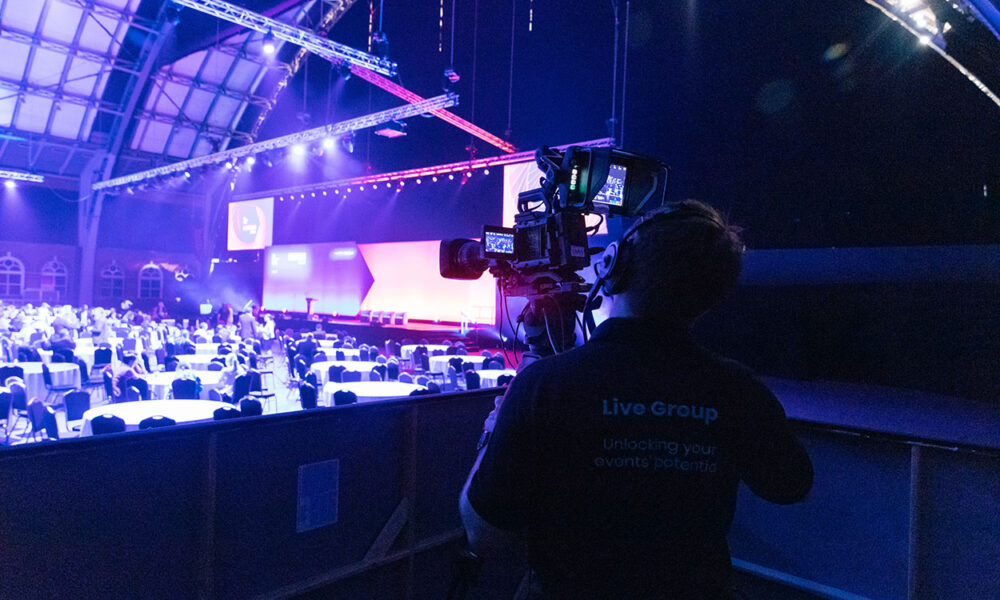
Indoor rooms normally provide a more controlled acoustic and lighting environment. Outdoor production may require weather-rated equipment, protected power, brighter displays, additional sound coverage, wind-resistant branding and more setup time. Camera exposure and screen visibility can change during the day, while background noise can affect presentations and livestream audio. Live Group’s guide to stage, AV, lighting and livestream planning explains why production should be designed around the audience, venue and show flow rather than treated as equipment rental.
Design the arrival and movement routes
Guest experience begins before the main space. Check the route from the MRT station, coach bay, car park or ride-hailing point to registration. Outdoor routes may need covered walkways, lighting and clear wet-weather directions. Indoor venues may create bottlenecks around lifts, escalators or a single foyer. Singapore’s Land Transport Authority states that all public buses and trains are wheelchair accessible and that 98% of bus stops are barrier-free, but planners should still assess the final route into the venue.
Coordinate catering and branding with the setting
Indoor catering benefits from controlled service conditions and established kitchen routes. Outdoor catering may need additional refrigeration, pest control, waste handling, shelter and replenishment planning. Branding must also suit the environment: freestanding signs, flags and scenic elements may need structural review, while projection and digital displays can be affected by daylight. Use venue-approved suppliers and obtain professional advice for temporary structures, electrical distribution and rigging.
Part 4: Match the Venue to the Event Format and Budget
Conferences, town halls and hybrid events
Indoor venues are usually the safer choice for keynote-led programmes, panels, training and hybrid delivery because they provide stronger control over sound, screens, internet and speaker movement. Marina Bay Sands, for example, combines conventional meeting rooms with dedicated virtual and hybrid event facilities. Outdoor areas can still support networking breaks or evening receptions alongside the main indoor programme.
Product launches and brand experiences
The correct format depends on the product and desired audience behaviour. Indoor spaces support controlled reveals, projection, immersive lighting and confidential demonstrations. Outdoor spaces can suit vehicles, lifestyle products, live demonstrations and content capture with a distinctive backdrop. A covered venue may offer the strongest compromise where presentation technology and atmosphere are equally important.
Networking, team events and celebrations
Outdoor and semi-outdoor venues often work well for informal conversation, wellness activities and social programmes. Indoor venues are more reliable for gala dinners, awards ceremonies and entertainment with detailed cues. For events that run for several hours, guest comfort and access to seating, restrooms and cooled areas should carry more weight than visual novelty.
Compare total cost, not only rental
An outdoor venue may appear less expensive before tentage, power, flooring, cooling, lighting, weather protection, security and backup space are included. An indoor venue may carry a higher base rate but include furniture, air-conditioning, internet and technical infrastructure. Request itemised proposals and compare the full operating model, including setup days, overtime, supplier restrictions, wet-weather options and reinstatement costs. Event liability insurance may apply to indoor and outdoor events, but it is not automatically weather-cancellation cover; policy terms and exclusions should be reviewed separately.
Consider sustainability without making assumptions
Neither format is automatically more sustainable. Indoor cooling and complex production consume energy, while outdoor events may require temporary structures, transport and single-use weather protection. Singapore’s MICE Sustainability Roadmap targets net-zero emissions by 2050. Practical choices include right-sizing the venue, reducing temporary builds, using reusable signage, planning public transport access and measuring waste and energy where possible.
Part 5: Use a Practical Site-Visit and Decision Checklist
Questions to ask during the site visit
- What usable capacity remains after staging, catering, registration and production areas are added?
- Where is the confirmed wet-weather backup, and is it reserved for the full event period?
- What shelter, drainage, cooling, power, internet and lighting are already provided?
- Which AV, catering and production suppliers are approved or compulsory?
- How will attendees travel from the nearest transport point to registration?
- What setup, rehearsal and teardown windows apply?
- Which temporary structures or activities need venue or government approval?
- Who has authority to change the programme because of weather or safety conditions?
Common mistakes to avoid
- Choosing an outdoor venue for appearance without securing a workable backup.
- Assuming an indoor room is production-ready without checking power, internet, acoustics and sightlines.
- Comparing rental prices without including temporary infrastructure, setup time and overtime.
- Treating accessibility as the venue entrance only rather than the complete arrival route.
- Waiting until event week to assign weather decisions, supplier responsibilities and guest communications.
A simple decision rule
Choose an indoor venue when programme control, AV reliability, long dwell time and weather certainty are the priorities. Choose an outdoor venue when atmosphere, open movement and experiential value outweigh the additional contingency work. Choose a covered or mixed venue when the event needs both. The final decision should be based on the complete attendee and production journey, not one attractive feature.
Outdoor programmes involving performances, tentage, stages or a temporary change in how a site is used may require approvals. A Public Entertainment Licence may be needed for certain entertainment activities, with official processing listed at approximately three weeks after a complete application. Where a temporary-building permit is required, the BCA application should reach the authority at least three weeks before scheduled construction. A Temporary Change of Use Permit may also apply. Check the exact activity, venue conditions and current agency guidance early, and use qualified professionals where necessary.
Frequently Asked Questions
Should companies choose an indoor or outdoor venue for a corporate event in Singapore?
There is no universal answer. Indoor venues suit programmes that need technical control and predictable comfort, while outdoor venues suit experiential and informal formats. The audience, programme, weather plan and total cost should decide.
What are the main advantages of indoor corporate event venues?
They provide greater control over temperature, rain, sound, lighting, internet and presentation conditions, with established guest and supplier facilities.
What weather risks should be considered for outdoor events?
Plan for heat, humidity, rain, lightning, wind and wet ground conditions. Confirm shelter, backup space, trigger times and the person authorised to change the programme.
Are outdoor venues suitable for hybrid events?
They can be, but the production plan must address internet resilience, weather protection, audio isolation, daylight, camera exposure and backup power. A sheltered or mixed venue is often easier.
How does venue choice affect the event budget?
Compare the total delivered cost. Outdoor events may require more temporary infrastructure and contingency spending, while indoor venues may include more facilities within the rental.
Conclusion
Indoor and outdoor venues can both support successful corporate events when the choice reflects the objective, audience, production and risk plan. For support comparing venues and coordinating event management, technical production and contingency planning in Singapore or across APAC, contact Live Group.